
Contents
Overview
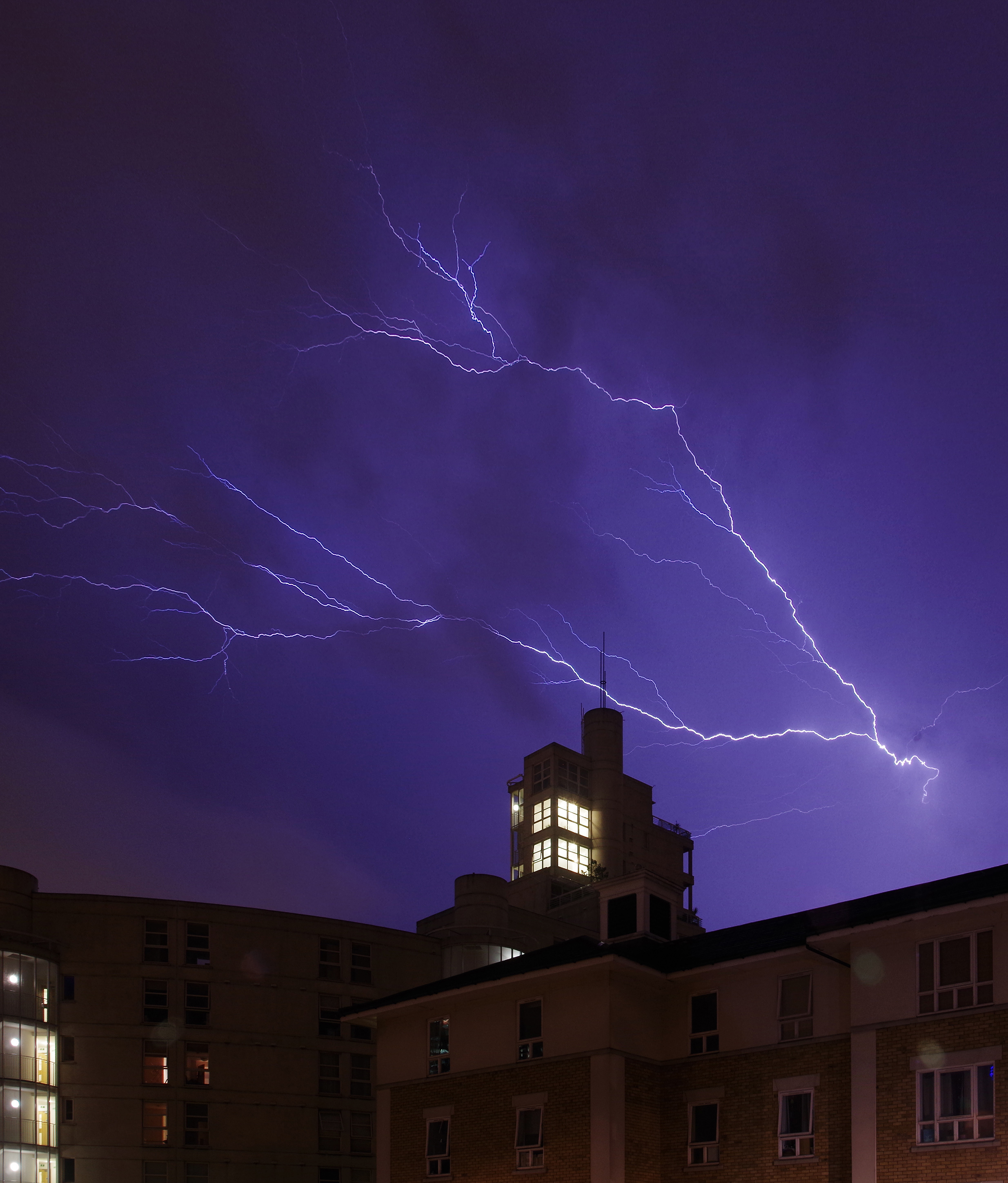
Electricity is the fundamental physical phenomenon encompassing the presence and motion of electric charge. It manifests in diverse forms, from the dramatic discharge of lightning to the controlled flow of current powering our homes and devices. This force is intrinsically linked to magnetism, forming the basis of electromagnetism, a cornerstone of physics. Understanding electricity is crucial for comprehending everything from the behavior of subatomic particles to the operation of global power grids and the intricate workings of electronic circuits. Its applications are ubiquitous, underpinning communication, computation, transportation, and countless industrial processes, making it indispensable to contemporary civilization.
⚡ Origins & History
The understanding of electricity's origins stretches back to ancient Greece, where observations of static electricity were first recorded. Early experiments began to demystify its nature. The 19th century saw a surge in discoveries, with scientists laying the groundwork for electromagnetic induction, and unifying electricity and magnetism into a single theory. The development of practical applications, such as the incandescent light bulb and the alternating current system, transformed societies by enabling widespread electrification, marking the dawn of the modern electrical age.
⚙️ How It Works
At its core, electricity arises from the behavior of charged particles. Electric charge is a fundamental property of matter. The movement of charged particles constitutes an electric current, typically measured in amperes (A). The potential energy difference that drives this flow is known as voltage, measured in volts (V), and the opposition to the flow is resistance, measured in ohms (Ω). These three quantities—current, voltage, and resistance—are interconnected by Ohm's Law.
📊 Key Facts & Numbers
Globally, electricity generation reached an estimated 29,000 terawatt-hours (TWh) in 2023. Fossil fuels, primarily coal and natural gas, still account for approximately 60% of this generation, though renewable sources like solar and wind power are rapidly expanding. The United States consumes the most electricity annually, around 4,000 TWh, followed by China. The average residential electricity price in the U.S. hovers around $0.17 per kilowatt-hour (kWh). Globally, over 770 million people still lack access to electricity, highlighting significant disparities in energy distribution.
👥 Key People & Organizations
Key figures in the history of electricity include Benjamin Franklin, who proposed the concept of positive and negative charges. Michael Faraday's discovery of electromagnetic induction paved the way for electric generators and transformers. James Clerk Maxwell formulated the classical theory of electromagnetic radiation. In the realm of application, Thomas Edison established the first central power station, while Nikola Tesla championed alternating current (AC) systems, which ultimately became the global standard for power transmission. Organizations like the Institute of Electrical and Electronics Engineers (IEEE) and the International Electrotechnical Commission (IEC) play crucial roles in setting standards and advancing the field.
🌍 Cultural Impact & Influence
Electricity has profoundly reshaped human civilization, enabling the Industrial Revolution and the subsequent digital age. It powers everything from the simple light bulb to complex computer processors, facilitating instantaneous global communication via the internet and enabling advancements in medicine, transportation, and entertainment. The electrification of homes transformed domestic life, while the development of electrical grids created new industries and urban landscapes. Its influence is so pervasive that modern society is often described as being dependent on a continuous and reliable supply of electrical power.
📈 Current State & Latest Developments
The current landscape of electricity is dominated by a transition towards renewable energy sources. Solar photovoltaic and wind power installations are experiencing exponential growth, driven by falling costs and climate change concerns. Simultaneously, advancements in battery storage technologies are addressing the intermittency of renewables, enabling more stable grids. Smart grid technologies are being implemented to optimize energy distribution and consumption, while the electrification of transportation, particularly electric vehicles, is creating new demand patterns. Nuclear fusion research also continues, holding the promise of a virtually limitless clean energy source.
🤔 Controversies & Debates
Significant controversies surround electricity generation and distribution. Debates persist regarding the environmental impact of large-scale hydroelectric dams and the disposal of nuclear waste from nuclear power plants. The siting of transmission lines often faces local opposition due to aesthetic concerns and potential health impacts, though scientific consensus generally supports their safety. The transition to renewables also presents challenges, including land use for solar farms and wind turbines, and the sourcing of rare earth minerals for battery production. Furthermore, the digital divide, where access to reliable electricity remains unequal globally, is a persistent ethical issue.
🔮 Future Outlook & Predictions
The future of electricity is geared towards a fully decarbonized and intelligent energy system. Experts predict a significant increase in distributed energy generation, with more homes and businesses producing their own power. The integration of artificial intelligence into grid management will enable predictive maintenance and dynamic load balancing, enhancing efficiency and resilience. The development of advanced solid-state batteries could revolutionize energy storage. Furthermore, breakthroughs in geothermal energy and potentially hydrogen fuel cells may offer additional clean energy pathways, aiming for a grid powered entirely by sustainable sources by mid-century.
💡 Practical Applications
Electricity's practical applications are virtually limitless. It is the backbone of the global power grid, delivering energy to homes, businesses, and industries for lighting, heating, cooling, and powering machinery. In electronics, it enables the function of all digital devices, from smartphones to supercomputers. Transportation is increasingly electrified, with electric trains and electric vehicles becoming more common. Medical equipment, industrial automation, and telecommunications all rely heavily on a stable electrical supply. Even in cooking, electric stoves and ovens have replaced many traditional methods.
Key Facts
- Category
- science
- Type
- concept