
Contents
Overview
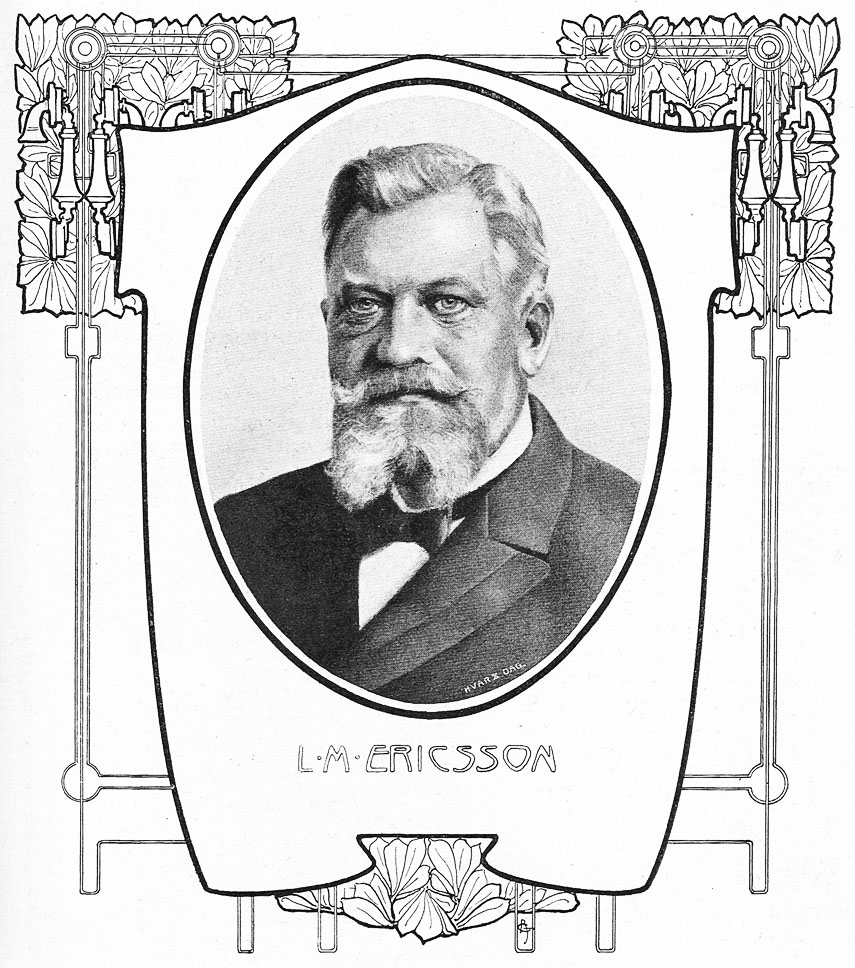
Lars Magnus Ericsson’s journey began in the small village of Värmskog, Sweden, on May 5, 1846. His early life was marked by hardship, including the loss of his father at a young age, which necessitated his entry into factory work at just 12 years old. Lars Magnus Ericsson apprenticed as a telegraph mechanic, a trade that ignited his passion for electrical engineering and communication. By gaining experience in Germany and working on telegraph equipment, Ericsson, alongside his friend Carl Johan Andersson, established a small workshop in Stockholm. This humble beginning, funded by a loan from a relative, was the genesis of what would become the global telecommunications giant, Telefonaktiebolaget LM Ericsson. The company's initial focus was on repairing telegraph equipment and manufacturing telephones based on designs like the Bell model, but soon Ericsson began developing his own innovations.
⚙️ How It Works
Ericsson's genius lay in his ability to simplify and improve existing technologies. His early telephones were designed for robustness and ease of use, often incorporating the microphone and receiver into a single handheld unit, a significant departure from earlier, more cumbersome designs. A key innovation was the 'skeleton phone' or 'system Ericsson,' which integrated the transmitter, receiver, and bell into a single, wall-mounted unit, reducing complexity and cost. This modular approach allowed for easier maintenance and expansion of telephone networks. He also focused on improving the quality of sound transmission and the reliability of the electrical circuits, crucial for the nascent telephone industry. His designs were not just functional but also aesthetically considered for the era, making them popular for both businesses and private homes.
📊 Key Facts & Numbers
By the turn of the 20th century, LM Ericsson was exporting telephones to over 100 countries, with its products installed in over a million systems. The company's early success was fueled by its competitive pricing and the reliability of its equipment, which was crucial for expanding telephone networks across vast distances. By 1900, the company had already produced over 100,000 telephones. Lars Magnus Ericsson himself retired from active management in 1918, leaving behind a company with a significant global footprint. The company's revenue at the time of his retirement was substantial, though exact figures from that period are difficult to pinpoint, reflecting its rapid growth from a small workshop to an international enterprise. His personal wealth was considerable, allowing him to live comfortably after his retirement.
👥 Key People & Organizations
The most pivotal figure, of course, is Lars Magnus Ericsson himself, the visionary founder. His business partner, Carl Johan Andersson, was instrumental in the early days, providing crucial financial backing and operational support. Later, his son, Gustaf L.M. Ericsson, took over leadership, guiding the company through significant growth and international expansion. Key figures in the broader telecommunications industry that indirectly influenced or were influenced by Ericsson's work include Alexander Graham Bell, the inventor of the first practical telephone, and Thomas Edison, whose work on the carbon microphone significantly improved telephone transmission quality. The company itself, Telefonaktiebolaget LM Ericsson, stands as a monumental organization shaped by these individuals.
🌍 Cultural Impact & Influence
Lars Magnus Ericsson's legacy is deeply embedded in the fabric of modern communication. His company, LM Ericsson, was at the forefront of developing and deploying telephone networks across the globe, fundamentally altering social interaction, business practices, and the dissemination of information. The widespread adoption of telephones, facilitated by Ericsson's affordable and reliable equipment, ushered in an era of instant long-distance communication. This paved the way for subsequent communication technologies, including radio, television, and eventually the internet and mobile networks. The very concept of a connected world, where individuals can communicate across continents, owes a significant debt to the foundational work of Ericsson and his contemporaries in the late 19th and early 20th centuries.
⚡ Current State & Latest Developments
In 2024, LM Ericsson remains a dominant force in the global telecommunications infrastructure market, particularly in the development and deployment of 5G networks. The company is actively involved in research and development for future technologies, including 6G and the Internet of Things (IoT). Recent developments include significant partnerships with major mobile carriers like AT&T and Verizon for 5G rollouts and continued investment in cloud-native solutions and artificial intelligence for network management. Despite facing intense competition from rivals such as Nokia and Huawei, LM Ericsson has maintained a strong market position, focusing on innovation and strategic acquisitions to bolster its portfolio, particularly in areas like cloud computing and network security.
🤔 Controversies & Debates
One of the primary controversies surrounding the telecommunications industry, and by extension LM Ericsson, relates to national security and the potential for espionage through network equipment. Concerns have been raised by various governments, particularly the United States, regarding the security of equipment manufactured by companies like Huawei and, to a lesser extent, LM Ericsson due to supply chain vulnerabilities and potential state influence. Another ongoing debate centers on the environmental impact of rapid technological obsolescence in consumer electronics and network infrastructure, a challenge faced by all major manufacturers. Furthermore, the company has faced scrutiny over its business practices, including past allegations of bribery and corruption, which have led to significant fines and compliance reforms.
🔮 Future Outlook & Predictions
The future for LM Ericsson appears to be increasingly focused on software-defined networks, edge computing, and the pervasive integration of AI into telecommunications infrastructure. As the world moves towards 6G and more sophisticated IoT applications, Ericsson is positioning itself as a key enabler of these advanced ecosystems. The company is expected to play a crucial role in developing the underlying technologies for smart cities, autonomous vehicles, and immersive extended reality (XR) experiences. However, the competitive landscape remains fierce, with ongoing geopolitical tensions and the constant need for massive capital investment in research and development posing significant challenges. Success will likely depend on Ericsson's ability to innovate rapidly, maintain strong customer relationships, and navigate complex regulatory environments.
💡 Practical Applications
The technologies pioneered by Lars Magnus Ericsson and his company have direct applications in virtually every aspect of modern life. His early telephones were the bedrock of personal and business communication, enabling instant voice conversations over long distances. Today, LM Ericsson's infrastructure powers mobile networks used by billions for voice calls, internet access, streaming media, and a vast array of digital services. Their equipment is critical for the functioning of global financial markets, emergency services, transportation systems, and the burgeoning IoT ecosystem, connecting everything from smart home devices to industrial sensors. The company's ongoing work in 5G and future 6G networks is essential for advancements in areas like remote surgery, smart grids, and advanced robotics, demonstrating the enduring practical impact of Ericsson's foundational innovations.
Key Facts
- Category
- technology
- Type
- topic