
Contents
Overview
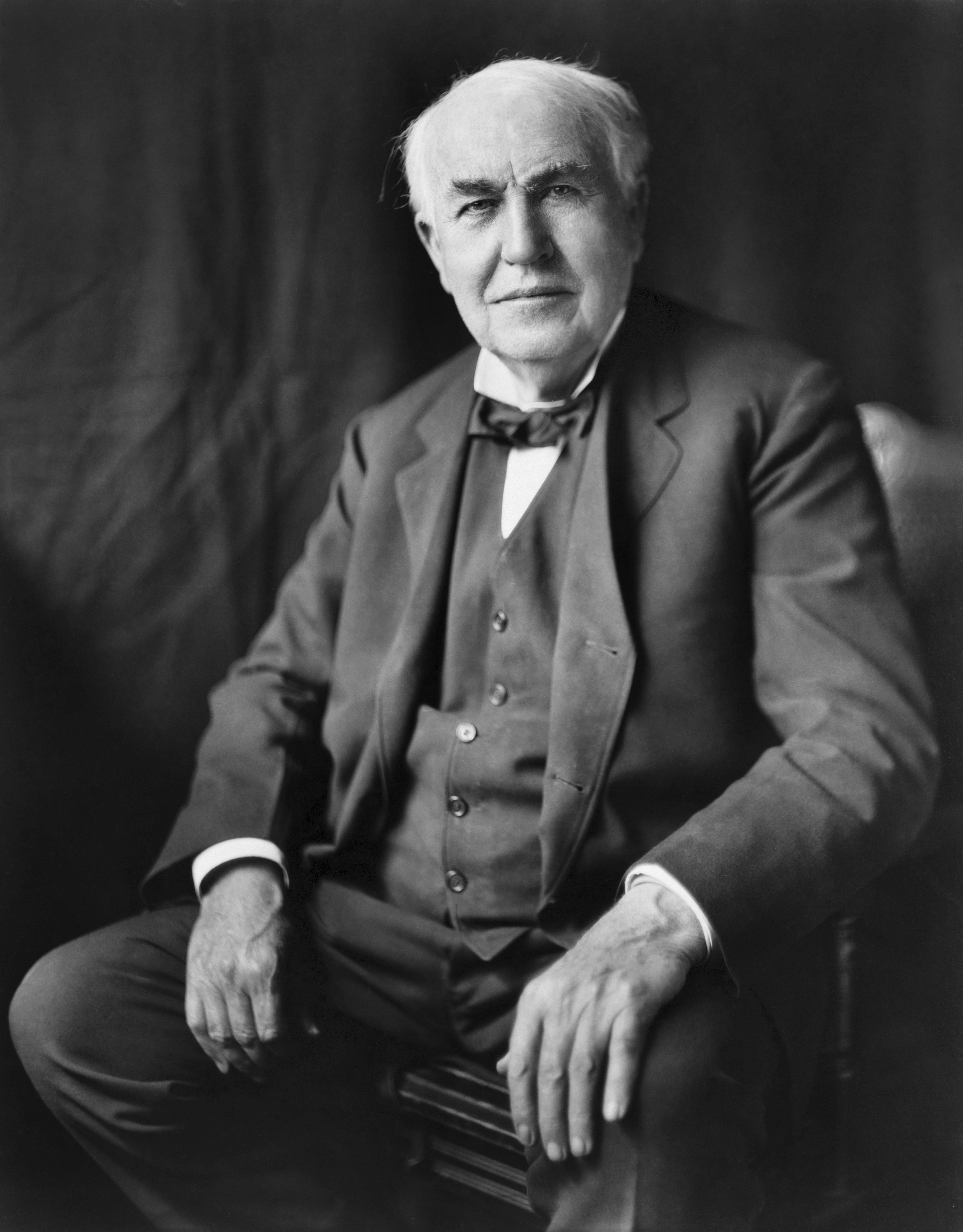
Born in Milan, Ohio, on February 11, 1847, Thomas Alva Edison's early life was marked by curiosity and a voracious appetite for learning, often outside formal schooling. His mother, Nancy Elliott, a former teacher, educated him at home after he suffered from scarlet fever and ear infections that led to significant hearing loss. Edison's early career as a telegraph operator in the American Midwest provided him with hands-on experience with electrical systems, directly inspiring his first major inventions. In 1876, he established his first industrial research laboratory in Menlo Park, New Jersey, a revolutionary concept at the time, which became the crucible for many of his groundbreaking innovations. This facility, funded by his burgeoning business ventures, allowed him to employ a team of researchers and mechanics, transforming invention from a solitary pursuit into a systematic, collaborative enterprise.
⚙️ How It Works
Edison's genius lay not just in conceptualizing new devices but in refining them into practical, marketable products. His approach to the incandescent light bulb involved extensive experimentation with filament materials, seeking a durable and efficient option. He famously tested thousands of materials before settling on carbonized bamboo, creating a bulb that could burn for hundreds of hours. Similarly, the phonograph was developed through a process of iterative design, starting with a stylus indenting tinfoil on a rotating cylinder and evolving to more sophisticated wax cylinders. General Electric was founded in 1892 from the merger of Edison General Electric and Thomson-Houston Electric Company, and was instrumental in developing and distributing electrical power systems, including dynamos and power stations, which were essential for the widespread adoption of his lighting and other electrical inventions.
📊 Key Facts & Numbers
Edison's career yielded an astonishing 1,093 U.S. patents, a record that stood for decades. His most famous inventions include the phonograph (patented 1877), the carbon microphone (crucial for telephone transmission, patented 1878), and the kinetoscope (an early motion picture device, patented 1891). By 1900, his Menlo Park laboratory was a sprawling complex, and by 1911, his West Orange, New Jersey facility employed over 5,000 people. His companies, including Edison Studios and Edison Records, generated substantial revenue, with his electric light and power systems estimated to have reached millions of homes and businesses by the early 20th century. He was awarded the Congressional Gold Medal in 1928 for his contributions to science and industry.
👥 Key People & Organizations
Beyond Edison himself, a constellation of talented individuals contributed to his success. William Le Roy Emerson was a key associate at Menlo Park, instrumental in developing the phonograph. John Kruesi, a skilled machinist, built the first working phonograph prototype based on Edison's designs. Lewis Latimer, an African American inventor and draftsman, worked for Edison and later for Thomson-Houston, significantly improving the carbon filament for light bulbs and patenting an improved air-conditioning system. Edison's second wife, Mina Miller Edison, was also an inventor and actively supported his work. His business rival, Nikola Tesla, though often in opposition, pushed Edison and the electrical industry toward alternating current (AC) systems, a stark contrast to Edison's direct current (DC) advocacy.
🌍 Cultural Impact & Influence
Edison's inventions profoundly altered the fabric of modern life, ushering in the age of electricity and mass communication. The incandescent light bulb extended the productive day and transformed urban landscapes, while the phonograph and motion pictures created entirely new entertainment industries. His systematic approach to invention, embodied by the Menlo Park research lab, became a model for industrial R&D, influencing companies like Bell Labs and Xerox PARC. The concept of 'invention factories' became a cornerstone of technological progress in the 20th century. His work in motion pictures laid the groundwork for Hollywood and the global film industry, forever changing how stories are told and consumed.
⚡ Current State & Latest Developments
While Edison's core inventions remain foundational, their legacy continues to evolve. The principles of organized research and development that he championed are now standard practice in virtually every major technology company, from Google to Apple. His early work in sound recording paved the way for digital audio technologies and streaming services like Spotify. The electric power infrastructure he helped build is now undergoing a transformation towards renewable energy sources, a shift that builds upon, rather than replaces, the electrical grid he helped establish. The ongoing development of artificial intelligence and advanced materials can be seen as distant descendants of his systematic approach to problem-solving and technological advancement.
🤔 Controversies & Debates
Edison's legacy is not without its controversies. His fierce advocacy for direct current (DC) power systems led to the infamous 'War of Currents' against George Westinghouse and Nikola Tesla, who championed alternating current (AC). Edison went to extreme lengths to discredit AC, even electrocuting animals to demonstrate its supposed dangers, a tactic that drew significant ethical criticism. Furthermore, his business practices were sometimes aggressive, and he faced patent disputes throughout his career. The extent to which Edison himself was the sole inventor versus the manager of a team of brilliant minds is also a subject of ongoing historical debate, with some scholars emphasizing the contributions of his employees like Francis Uppenrcu and Alfred E. Brown.
🔮 Future Outlook & Predictions
The future of innovation continues to echo Edison's methods. We can anticipate further integration of AI into research and development processes, potentially accelerating the pace of discovery far beyond what even Edison envisioned. The ongoing quest for sustainable energy solutions will likely involve new breakthroughs in power generation and storage, areas Edison himself explored. As technology becomes increasingly interconnected, the challenges of standardization and interoperability—issues Edison grappled with in his own time—will remain critical. The drive to create 'disruptive' technologies, a concept rooted in the transformative power of Edison's inventions, will undoubtedly continue to shape industries and economies worldwide.
💡 Practical Applications
Edison's inventions have direct practical applications that are ubiquitous today. The incandescent light bulb, though largely superseded by more efficient LEDs, established the foundation for modern lighting. His work on the phonograph directly led to the development of vinyl records, cassette tapes, CDs, and digital audio formats, impacting music, spoken word, and data storage. The kinetoscope and subsequent motion picture cameras were the precursors to all film and video technology, from cinema to YouTube. His improvements to the telegraph and telephone were crucial for telecommunications infrastructure, enabling instant global communication. The electric power distribution systems pioneered by his companies remain the backbone of modern electrical grids worldwide.
Key Facts
- Category
- technology
- Type
- topic